About Us

Meet the hosts and explore our evidence-based, real-world approach to understanding complex social policies.

The interior of a compact, bright primary care clinic waiting area that serves a low-income neighborhood, carefully staged without people. Rows of simple, clean chairs are neatly aligned, a reception desk holds a small stack of numbered tokens, and informational posters about preventative care and worker protections are represented by icons and diagrams without text. Large windows show an adjacent bus stop and mid-rise apartment buildings, signaling accessible location. Soft, diffused afternoon light fills the space, complemented by subtle ceiling lighting, creating an even, reassuring brightness. Photographic realism, shot from an eye-level corner angle to capture depth and spatial flow. The atmosphere is calm, orderly, and inclusive, illustrating how universal healthcare policies can translate into approachable community clinics embedded in everyday urban life.
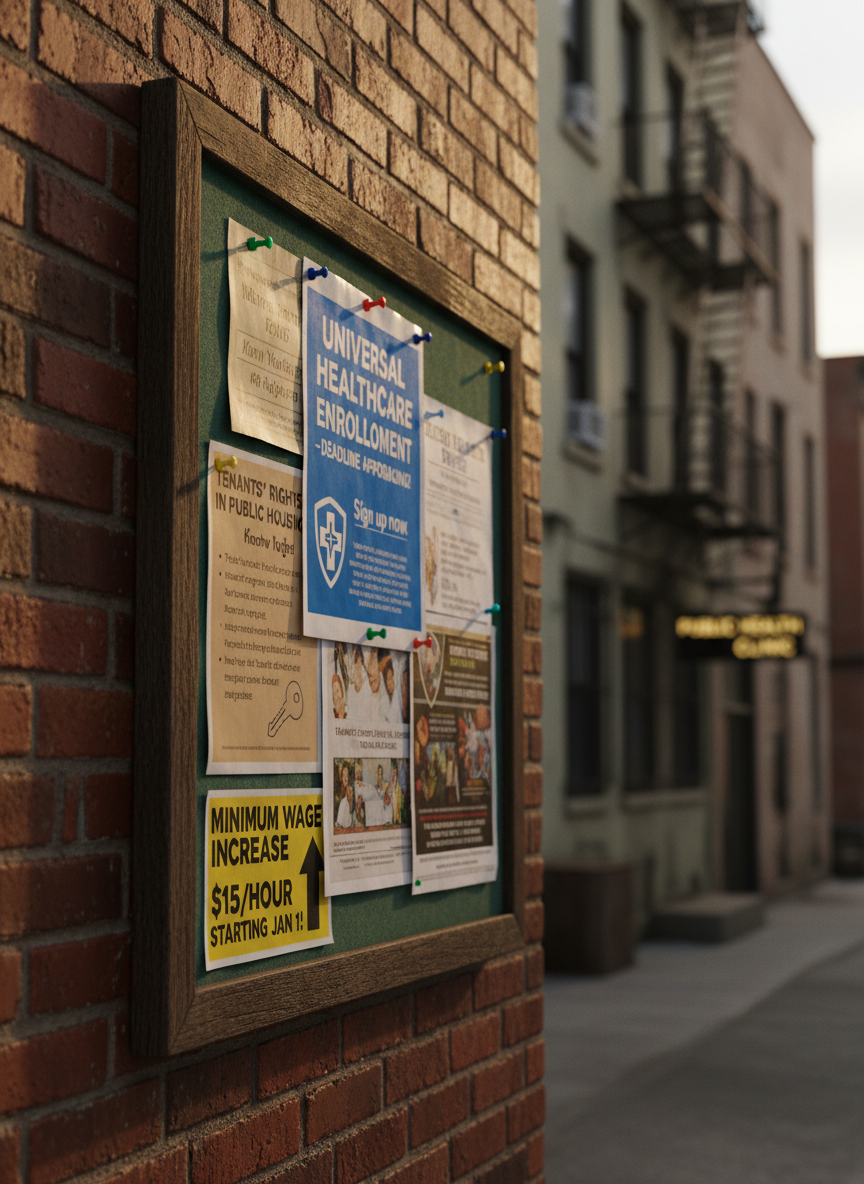
A close-up of a sturdy, weathered community bulletin board mounted on a brick wall, covered in overlapping flyers about universal healthcare enrollment, tenants’ rights in public housing, and minimum wage changes. Pushpins in varied colors hold slightly curled paper edges, revealing layers of past notices beneath. The alley-like urban setting recedes into a softly blurred background of mixed-use buildings and a small public clinic sign. Late afternoon golden light grazes the brick texture and paper fibers, casting delicate, directional shadows. Captured in photographic realism from a slightly angled perspective, the composition uses rule of thirds to emphasize the healthcare flyer. The atmosphere feels grounded, local, and pragmatic, highlighting how national social policies filter down into real neighborhoods without depicting any people.

Evidence-Based Social Policy Podcast

The Court of Progressive Opinion examines how policies like universal healthcare, public housing, and labour protections shape real communities, using rigorous research, clear storytelling, and diverse voices. Learn how evidence challenges assumptions and follow the links below to explore the podcast.